Alpha Acoustiki engineering team uses state-of-the-art measuring instruments and measures all kinds of noise sources in many buildings (commercial & residential projects, libraries, hospitals etc.). Our team is often engaged to conduct in situ evaluations to ensure mixed-use developments (i.e. shops and households within the same building) which integrate with surrounding neighbourhoods and communities.
Based on the building sound level measurement carried out, our acoustic engineers can analyze the potential impact of building mechanical equipment, traffic, other noise/vibration sources. An extensive analysis is included in the final technical report, along with noise control strategies required to comply with noise rules and regulations.
Sound insulation measurements of airborne noise
When the sound waves travelling through the air reach a building or an internal wall element, they hit it and cause it to vibrate. These vibrations travel through the structure or building and are radiated out the other side.
We make these acoustic measurements of sound insulation transmitted through the air between adjacent rooms or from the external side of the building. It can come from external sources (cars, trains, airplanes, human activities,) but also from internal sources (e.g. noise sources in the same or neighbouring apartment).
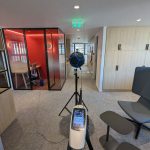
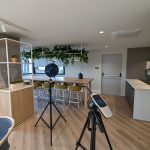
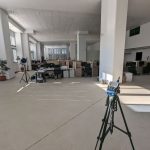
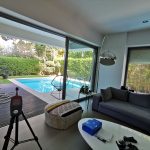
The measurements of airborne noise are executed with the use of Sound level meter Type 1 (high precision), and a prototype Omni-directional Sound Source (Dodecahedron loudspeaker). Field sound insulation measurements that were described in ISO 140-4, −5, and −7 were primarily intended for measurements where the sound field could be considered being diffused.
The evaluation of these acoustic measurements is based on the following International Standard: ISO 717-1:2013. Acoustics — Rating of sound insulation in buildings and of building elements — Part 1: Airborne sound insulation
This ISO standard a) defines single-number quantities for airborne sound insulation in buildings and of building elements such as walls, floors, doors, and windows; b) takes into consideration the different sound level spectra of various noise sources such as noise sources inside a building and traffic outside a building; c) gives rules for determining these quantities from the results of measurements carried out in one-third-octave or octave bands in accordance with ISO 10140-2, ISO 140-4, and ISO 140-5. The single-number quantities in accordance with ISO 717-1:2013 are intended for rating airborne sound insulation and for simplifying the formulation of acoustical requirements in building codes.
Tapping machine to test and measure impact sound insulation.
With the use of a tapping machine we can conduct Impact sound level measurements in building’s floors with different coverings, in accordance with EN ISO 140-7: Field measurements of impact sound insulation of floors.
The method applies to bare floors and floors with coverings, in order to evaluate the Normalized impact noise level (L’n) and Standardized impact noise level (L’nT) parameters. The evaluation of the reduction of the Weighted normalized impact sound pressure level, (Ln,w ) by floor coverings on lightweight floors are based on EN ISO 717-2:2013: Rating of sound insulation in buildings and of building elements. Part 2: Impact sound insulation.
We use cookies to offer you the best possible experience on our site. If you continue to use the site, we will assume that you are satisfied with this.

 Skip to content










 ALPHA Acoustiki Acoustic Measurements CV